
-
2025-12-18
- 0 Comment
10 Years of CleanAccess and 10 Things the Food Industry Has Taught Us
The end of the year is a good time for reflections.
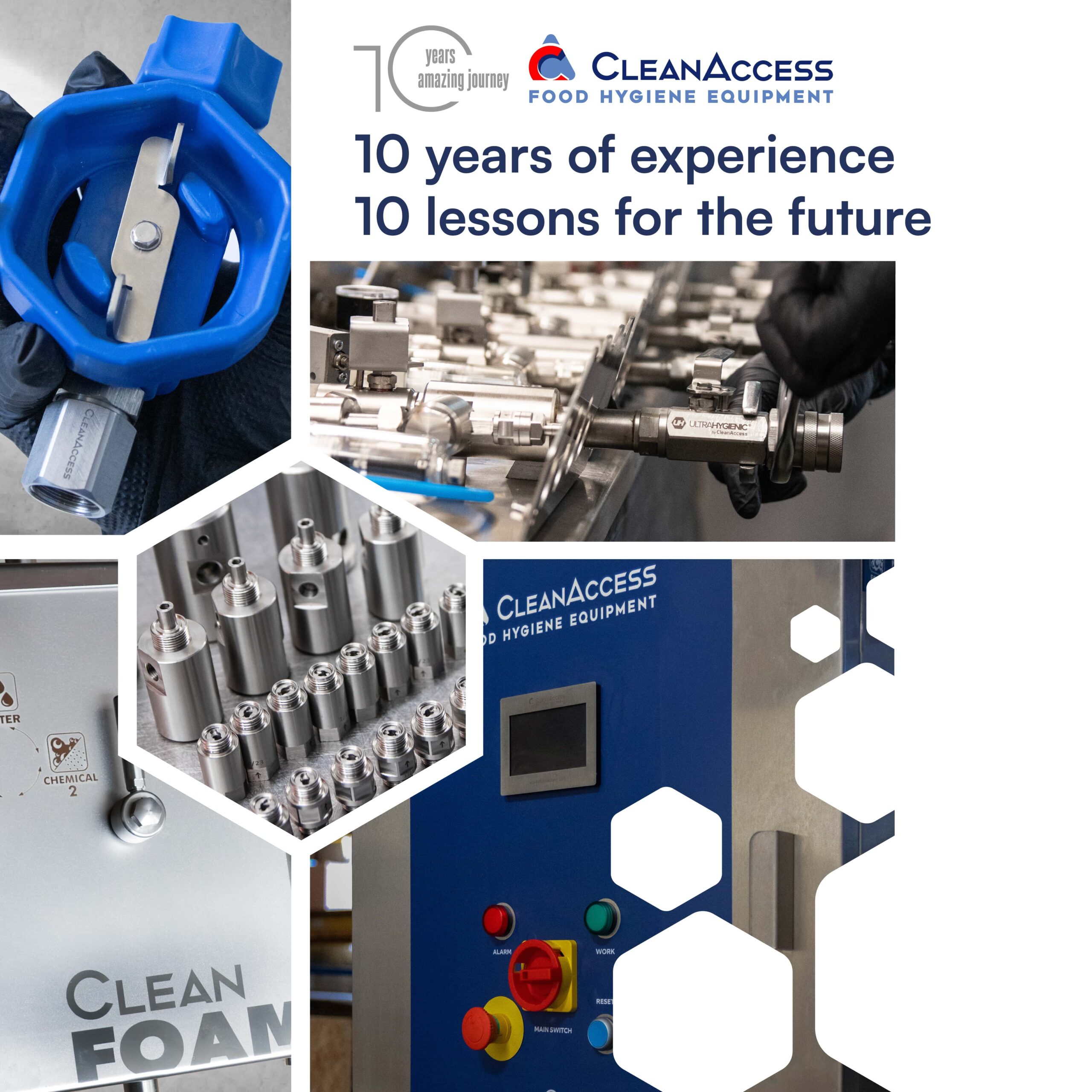
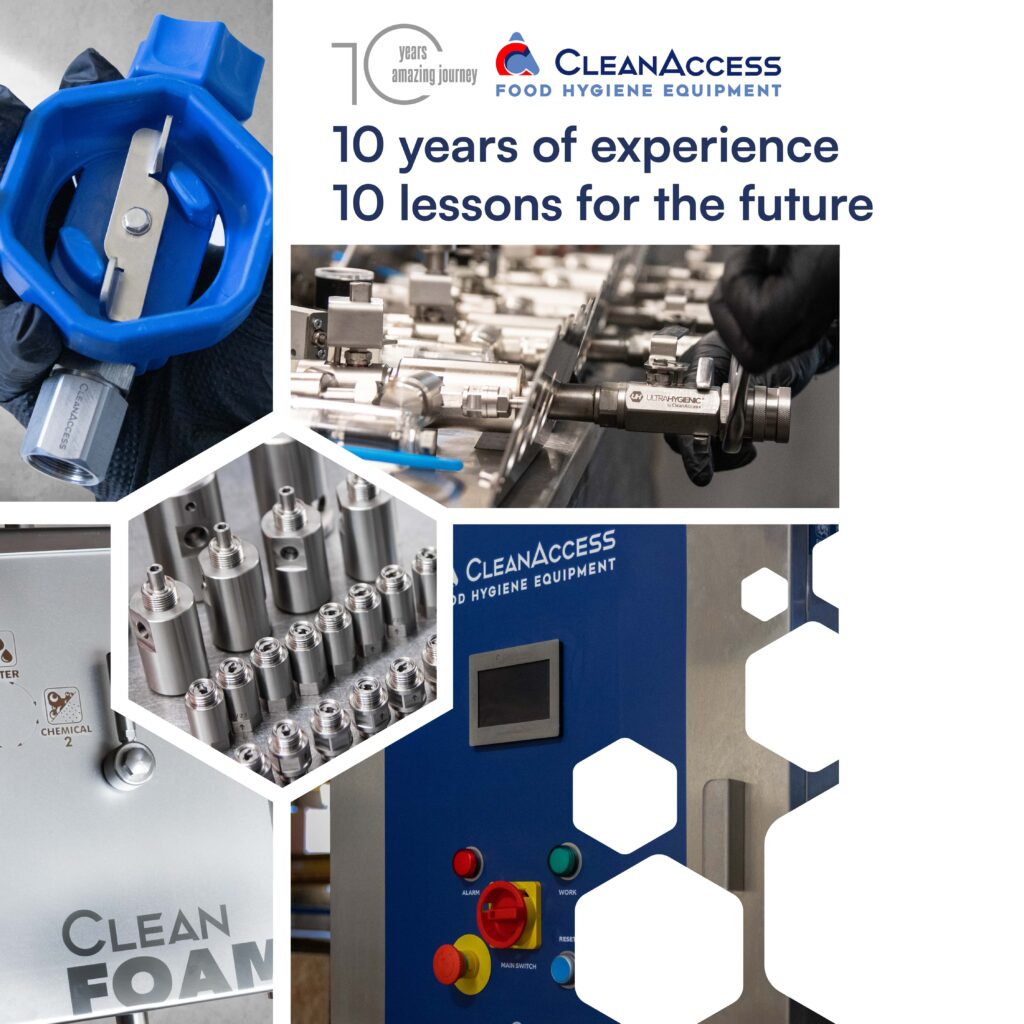
For us, it is also a symbolic moment: 10 years of CleanAccess.
Every industry has companies that, after a decade, have a larger catalog and more products. Besides that, we have something else: experience built in food plants, through implementations, decisions, and the consequences of those decisions.
The past year only confirmed this. It was intense, demanding, and very insightful. That’s why instead of a classic “anniversary article,” we decided to do something different.
Here are 10 things that have changed the way we think about designing solutions for the food industry over the past decade and that are worth knowing if you want to develop your plant in the right direction.
1. Data is the new foundation, not an add-on
Decisions about cleaning processes are increasingly made based on real data, not intuition or habit.
That’s why we developed Smart Data Access, a system that allows quality and maintenance teams to monitor processes, water, energy, chemical usage, and machine operating time. Concrete control available locally and remotely.
2. Every component matters, not just the wash station
From the central unit to quick couplings or valves, every component of the system affects process efficiency and safety.
Neglecting details can invalidate an investment in even the most expensive wash stations. That’s why we treat all accessories and system components as equally important links in the hygiene chain.
3. Made in Poland
Local production is not only “economic patriotism”, it’s quality assurance, project control, and fast service. For our clients, it is a real advantage: short delivery times, parts availability, and quick response when needed.
4. Automation where it makes a difference
Not every place is worth automating, but where cycles are repetitive, long, or hard to reach, automation brings tangible benefits: reduced resource usage, shorter time, less physical work.
That’s why we implement automated washing systems for tunnels, conveyors, or chambers exactly where it makes technological and financial sense.
5. Hygiene is also ergonomics
Poorly designed tools lead to higher team fatigue. And a tired team results in poorer cleaning and higher risk of errors. That’s why ULTRA HYGIENIC® accessories are designed to facilitate work through low weight, comfortable grip, and high durability.
6. It’s not just the line that needs cleaning, but the cleaning tools too
It may sound obvious, but many still forget: satellites, valves, hoses all components of the cleaning system must also be kept clean.
That’s why our solutions are designed to be safe, easy to rinse, and free of crevices where dirt can accumulate.
7. Simplicity is the future, not a limitation
A cleaning system should be understandable to any operator without excessive instructions or special training.
Intuitive operation means fewer mistakes and greater repeatability. Instead of “complex solutions,” we design equipment that works clearly and predictably.
8. Consulting is the basis of successful implementation
Every implementation starts with a conversation with the client because only they know the real needs and limitations of their line.
Technologist, quality specialist, operator, we listen to their feedback and choose solutions that work under specific conditions. That’s why our projects don’t end with equipment delivery but also include consulting and customization.
9. Every project is “tailor-made”
No two plants are identical. They differ in line layout, product type, and quality requirements.
That’s why every washing system project is developed individually: from pressure and flow parameters to hose length and satellite selection. Only then does the solution make sense.
10. Global reach and practical experience
Our washing systems operate in plants around the world. Every implementation, under different production and technological conditions, allows us to gain experience that is hard to replace in any other way.
This diversity of projects and environments gives us a unique perspective, enabling us to create solutions that are truly practical, safe, and tailored to every plant.